Easy HVAC Application
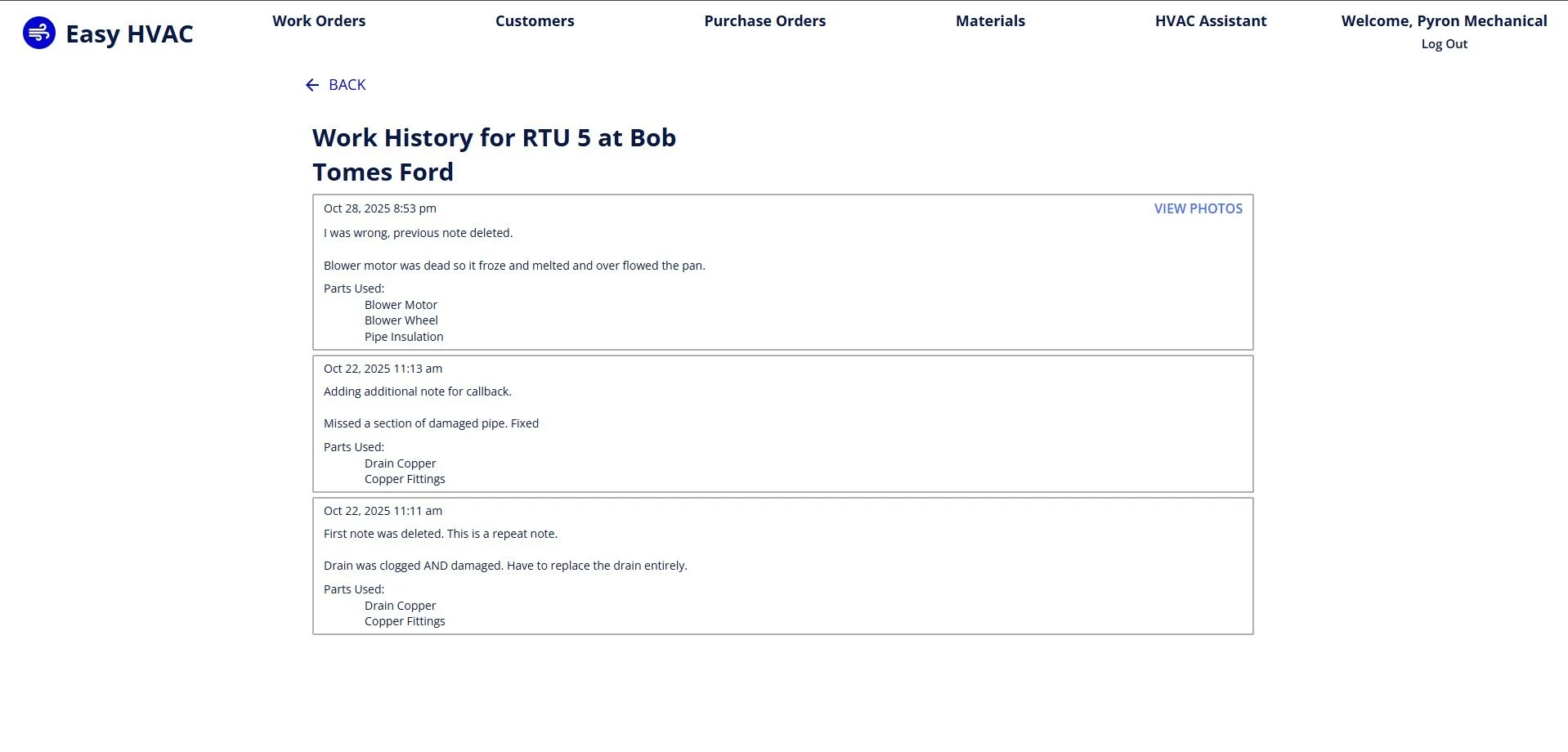
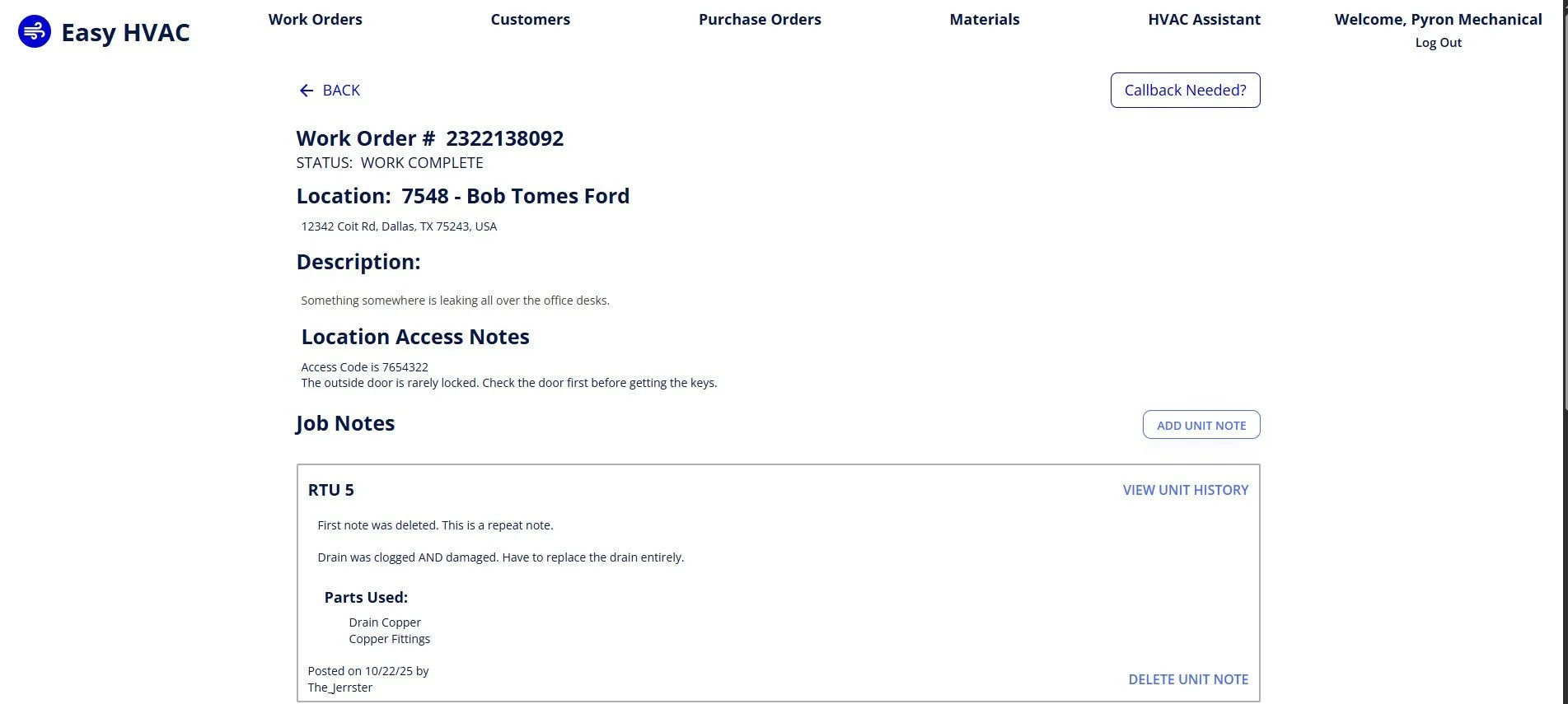
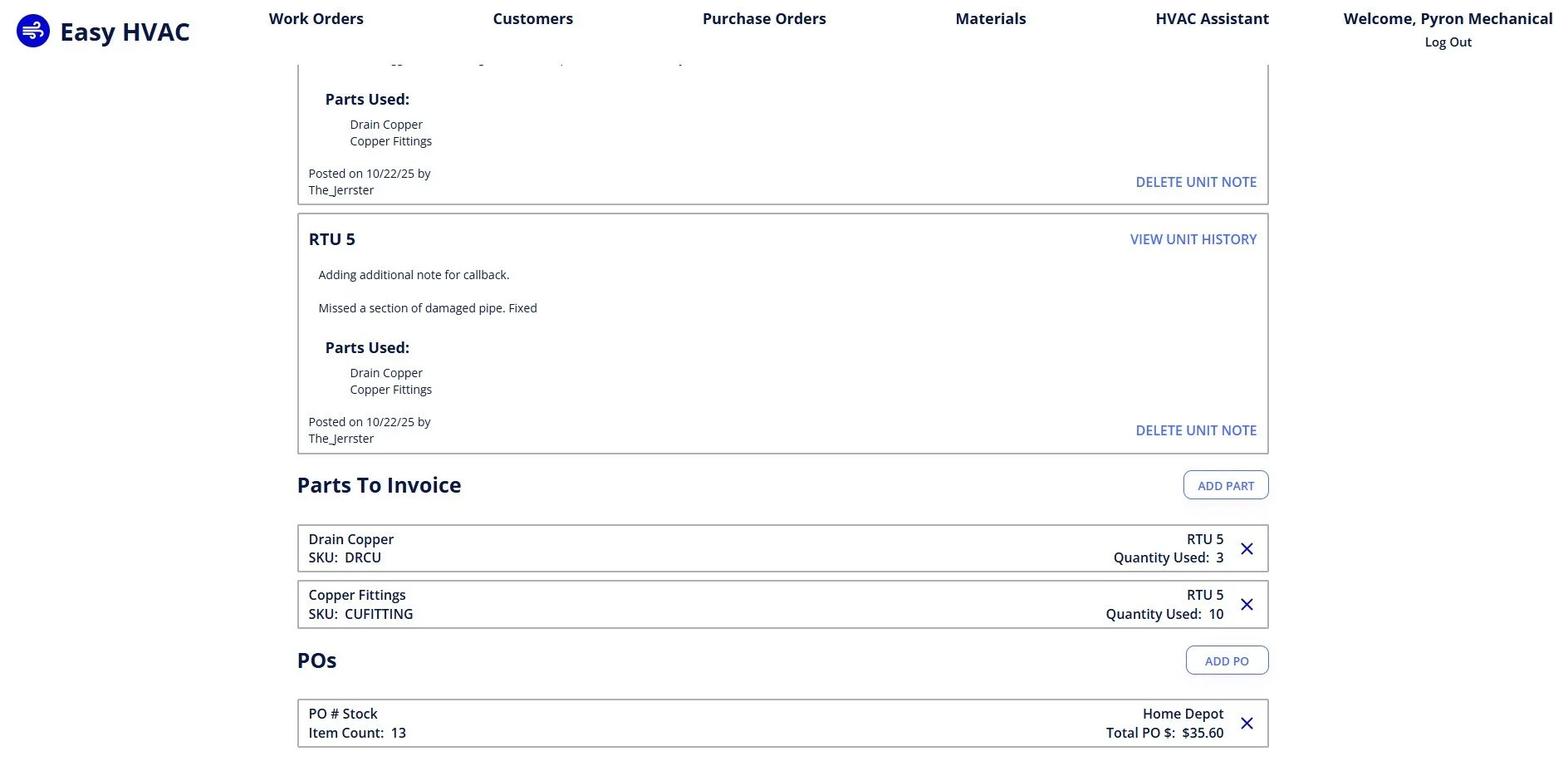
There is enough hard work being done on a job site. Work order management should not be part of it. I created the Easy HVAC app to help me collect information about each job AT THE POINT OF INSEPTION. Trying to recount details about a job after the work is done and I’m now at home is hard to do. This field application focuses the work order details to revolve around the HVAC unit being serviced. A technician can input all the notes and to-do’s that happened for that unit on that job. They can also add the specific parts that were replaced AND account for any purchase orders created for that particular job. Easy Peasy.

HVAC Assistant
The HVAC assistant is an AI-powered diagnostic application focused on helping the technician cut the time and energy it takes to determine the problem. It is not focused on diagnosing the cause of the problem nor will it deliver a solution. The majority of the technician’s time is spent just trying to figure out what the actual problem is. Once that is determined, the solution and cause of the problem comes from the technician’s experience and common sense.
Problem Statement:
Current work order management applications are are either directly connected to enterprise customers and inaccessible as a stand-alone system, or the platforms are business management heavy, with very few features dedicated to work order management. The small MEP (Mechanical, Electrical, and Plumbing) organizations are in need of a work order management software that is focused and designed to document work details at the point of inception; the job site.
Solution Statement:
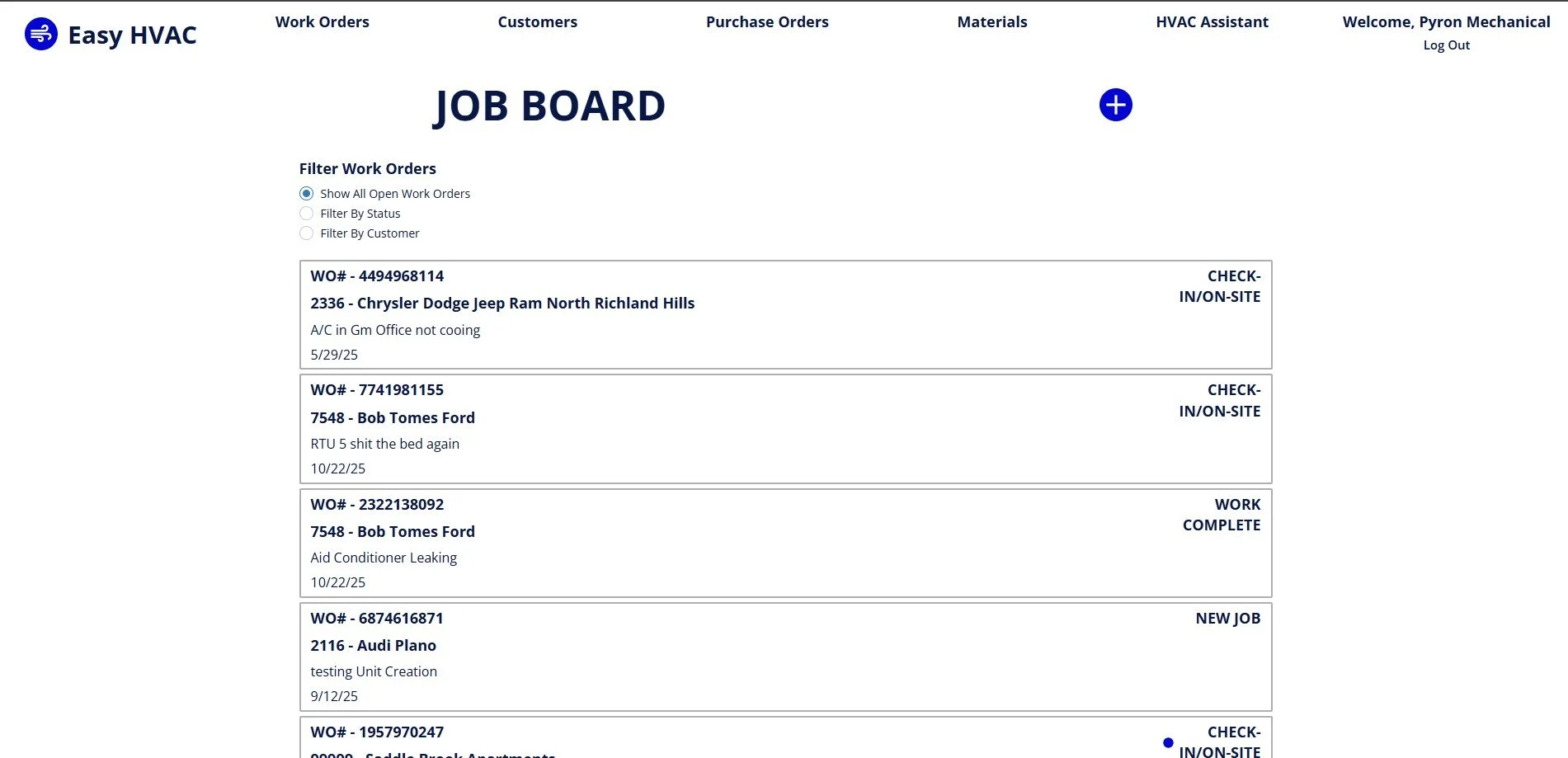
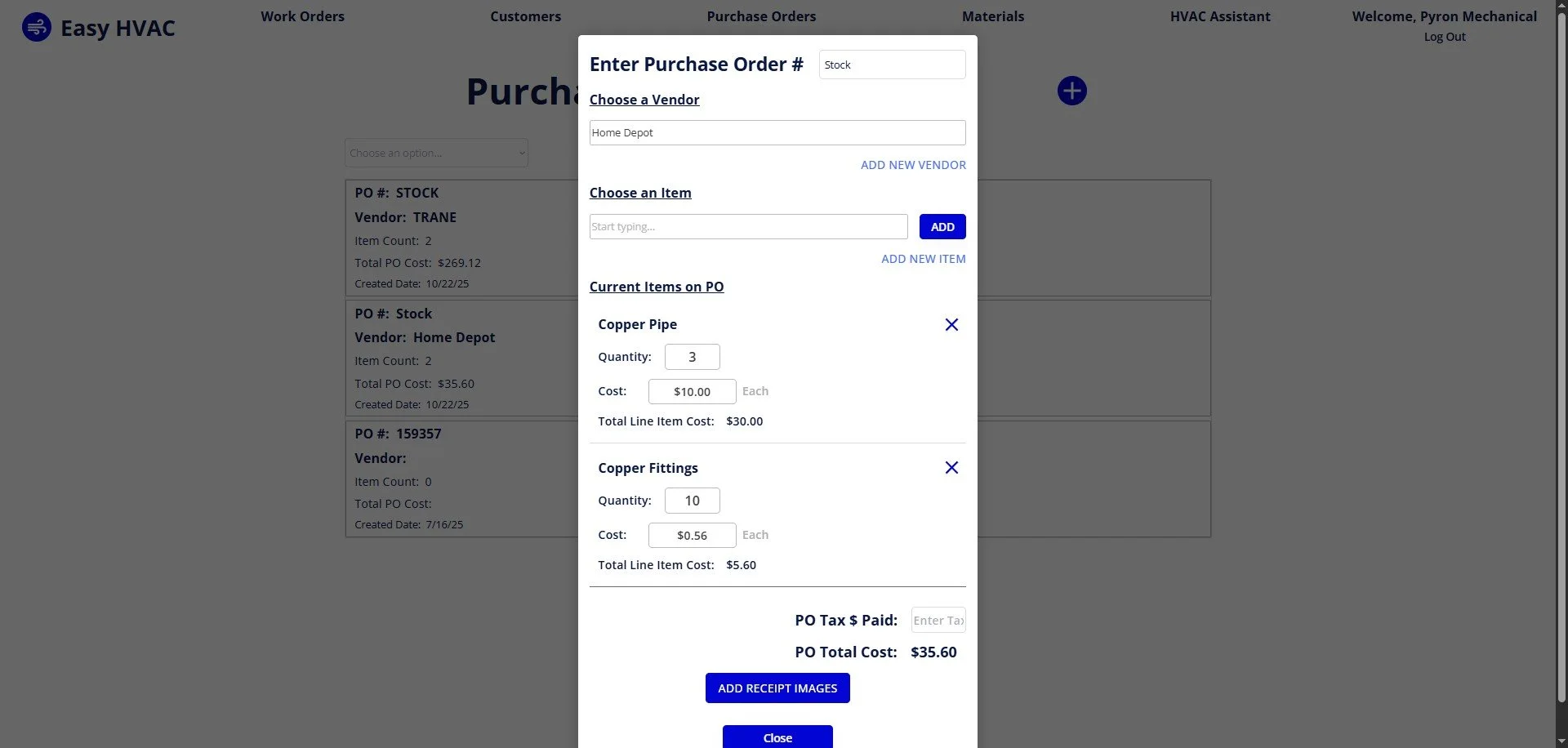
Easy HVAC hosts work order management tool modules like a job board and work order details, parts used, purchase order logs, customer lists, and unit history with photographic backups. These core modules support the technician’s requirement to capture the details of their work for documentation and submission to clients later on.
Separately, the HVAC Assistant is an AI agent solely focused on helping to identify the problem. Ultimately, This tool cuts the time it takes to diagnose a problem and therefor, saves the technician time and labor dollars.
Product Description:
The HVAC assistant (AI Agent) was modeled after ODB-II, the standard way modern cars report what’s wrong with them. In much the same way, an HVAC technician must go through a series of tests to diagnose the failure of a unit. Even after various tests, mechanical functionality and pressure testing, the technician still needs to determine the failure point. The HVAC Assistant gets the technician to a failure point fast (minutes, not hours). Combine that diagnosis with a technician’s experience and knowledge and the technician saves labor hours in getting to a solution.
Product Pivots:
Easy HVAC was put together piece by piece with multiple tests in between. The primary focus was on first on the work order. We created notes. Then we found too much time was spend rereading to get to what parts were used. So we added a section for what parts were changed. This continued with various module that added functionality and clarity of information but also increased feature bloat. We made a major change when we realized that all the information gathered was specific to HVAC units being serviced and the value of having the entire work history at your fingertips. We pivoted the flow of information to the individual unit instead of the work order. General reference and searchability functionality still held but now the information could be useful in the natural flow of work.
The HVAC Assistant was easy enough to implement using free-flow text and chat completion APIs. The initial MVP had built in system prompts to silo the AI’s persona and simple response guardrails. Ask a question about HVAC, get a commensurate response. In testing, we found that the responses became very wordy, but when limits on tokens were implemented, the AI responses froze. So version 2 was designed to show structured reasoning under constraints. In this version, I designed the decision tree with help from an SME, the guardrails, explicit assumptions, refusal logic, and deterministic outputs. Then we were able to use the LLM model (GPT Mini-3o) to process and provide a post action summary for the technician to confirm the failure point and surmise a solution. Controlling the LLM behavior provides a more acute tool.