HVAC Diagnostic Agent
AI-powered diagnostic tool for HVAC field technicians
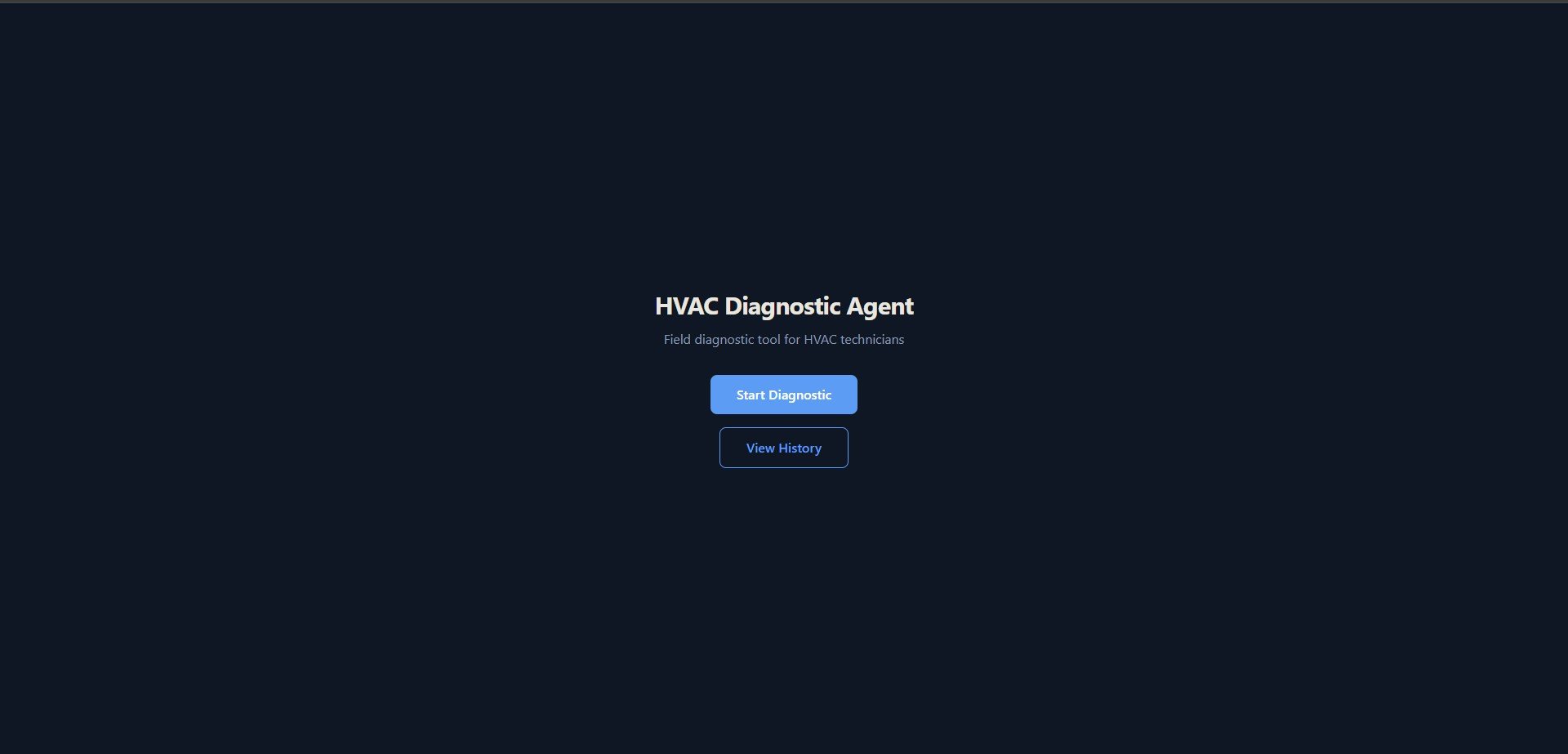
A web-based tool where techs tap through structured intake questions and get a plain-English diagnosis — top failure points, confidence level, severity rating, and safety flags. No chat, no typing, no guesswork.
How it works
Select the Problem
Step 1
The tech picks from six common HVAC complaints: no cooling, no heating, won't start, short cycling, unusual noise, or weak airflow.
Answer Follow-Up Questions
Step 2
The app branches into complaint-specific questions. Each screen has a max of six tappable options. A tech on a rooftop shouldn't be scrolling through twelve screens.
Get the Diagnosis
Step 3
The AI analyzes the symptom combination and returns a plain-English diagnosis with the top two most likely failure points, a confidence level, severity rating, and safety flags if applicable.
Six-branch diagnostic intake driven entirely by a JSON config — adding a new complaint branch requires zero code changes
AI diagnosis powered by Claude (Anthropic) with structured output
Diagnostic history saved locally so techs can review past sessions
Downloadable PDF reports
Email report summary with one tap
Demo access gate to protect API usage
Features
Why I Built It This Way
This project isn't just a coding exercise. Every decision was a product decision.
Web app, not native mobile. Employers get a URL. Zero friction to try it. No app store, no download, no TestFlight invite.
Structured intake, not freeflow chat. Chatbots are slow for field work. Tapping through cards is faster and produces consistent data for the AI to analyze.
HVAC techs are the user, not homeowners. The language, the options, and the flow all assume trade-level knowledge. A homeowner wouldn't know what short cycling means.
Diagnosis only, no repair recommendations. The agent identifies the fault. The tech decides the fix. A recommendation layer with cost tiers and parts data is a planned Phase 2.
No fault codes. There is no universal HVAC fault code standard. Plain English is more useful than made-up codes.
Max six options per screen. Consolidated for speed. Every extra tap is friction for a tech standing on a roof in August.
Tech Stack
Next.js 14 · TypeScript · Tailwind CSS · Claude API (Anthropic) · Vercel · Git/GitHub
Built by Jerry King III as a portfolio piece demonstrating AI-assisted product development.